
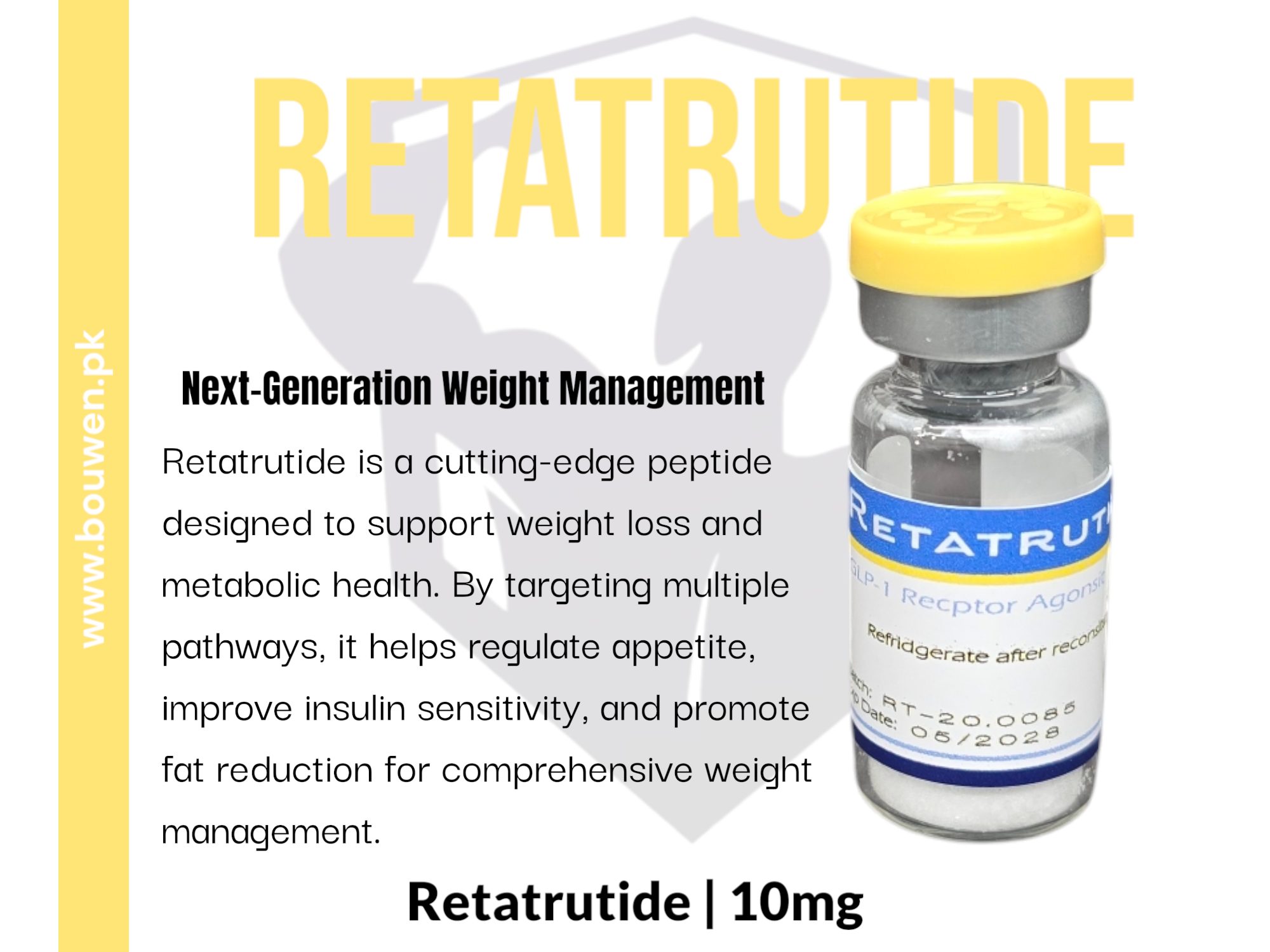
Retatrutide — Triple-Agonist Metabolic Peptide (10mg / 20mg / 30mg / 50mg Units)
Retatrutide represents the most advanced evolution of incretin-based metabolic therapy.
Unlike GLP-1–only or dual-agonist compounds, retatrutide is a triple receptor agonist,
simultaneously targeting GLP-1, GIP, and glucagon receptors.
This three-pathway activation is designed to deliver profound appetite suppression,
enhanced fat oxidation, and robust metabolic flexibility, positioning retatrutide
as a next-generation compound for advanced weight-loss and metabolic research.
✅ Product Overview
| Compound | Retatrutide |
| Compound Class | Triple incretin receptor agonist (GLP-1 / GIP / Glucagon) |
| Available Units | 10mg • 20mg • 30mg • 50mg (total peptide content) |
| Primary Research Focus | Body-fat reduction, appetite control, metabolic rate support, insulin sensitivity |
| Typical Administration | Once-weekly protocol (long-acting peptide) |
🧠 Mechanism of Action — Triple Pathway Advantage
0
- GLP-1 receptor activation: Enhances satiety signaling, reduces appetite,
slows gastric emptying, and supports glucose-dependent insulin secretion. - GIP receptor activation: Improves insulin sensitivity and amplifies
metabolic efficiency, potentially mitigating some GLP-1–related GI limitations. - Glucagon receptor activation: Increases energy expenditure, promotes
hepatic fat oxidation, and supports basal metabolic rate—one of the key differentiators
of retatrutide versus GLP-1/GIP-only compounds. - Net effect: Simultaneous appetite suppression and increased
caloric expenditure—targeting both sides of the energy balance equation.
📅 Dosing Protocol (Educational Reference)
Retatrutide is typically evaluated using a gradual once-weekly titration model
to improve tolerability and minimize gastrointestinal side effects.
The following represents a commonly referenced research-based titration framework.
- Weeks 1–4: Very low introductory dose (often sub-therapeutic)
- Weeks 5–8: Incremental increase as tolerance improves
- Ongoing: Stepwise increases every 3–4 weeks as needed
- Advanced phase: Higher maintenance ranges used only after full adaptation
Key principle: Retatrutide is potent. Slower escalation dramatically improves
comfort, adherence, and long-term outcomes.
🥗 Dietary & Lifestyle Recommendations
- Protein-priority nutrition: Supports lean mass preservation during rapid fat loss.
- Smaller meal volumes: Helps reduce nausea and reflux due to delayed gastric emptying.
- Moderate fat intake: Excessive fats near injection days may worsen GI symptoms.
- Hydration & electrolytes: Critical when appetite is suppressed.
- Resistance training: 2–4× weekly to maintain metabolic rate and muscle tissue.
- Daily movement: Enhances glucagon-driven fat oxidation benefits.
⚠️ Contraindications & High-Risk Conditions
🚫 Do NOT use if you have:
- Personal or family history of medullary thyroid carcinoma (MTC)
- MEN-2 (Multiple Endocrine Neoplasia type 2)
- Known hypersensitivity to incretin-based peptides
⚠️ Use extreme caution with:
- History of pancreatitis
- Severe gastrointestinal disorders
- Gallbladder disease
- Advanced kidney disease or dehydration risk
- Pregnancy or breastfeeding
💊 Medication & Compound Interactions
- Other GLP-1, GIP, or glucagon receptor agonists
- Insulin or insulin secretagogues (hypoglycemia risk)
- Oral medications with narrow absorption windows
- Oral contraceptives (effectiveness may be reduced during titration)
😵 Commonly Reported Effects
- Nausea
- Reduced appetite
- Diarrhea or constipation
- Fatigue during early titration
- Injection-site irritation
🧾 Important Notice
This product description is provided for educational and research-related purposes only.
Retatrutide is not approved for general consumer use. All information presented here is not intended
to diagnose, treat, cure, or prevent any disease. Any research involving metabolic peptides should
be conducted under appropriate professional guidance.